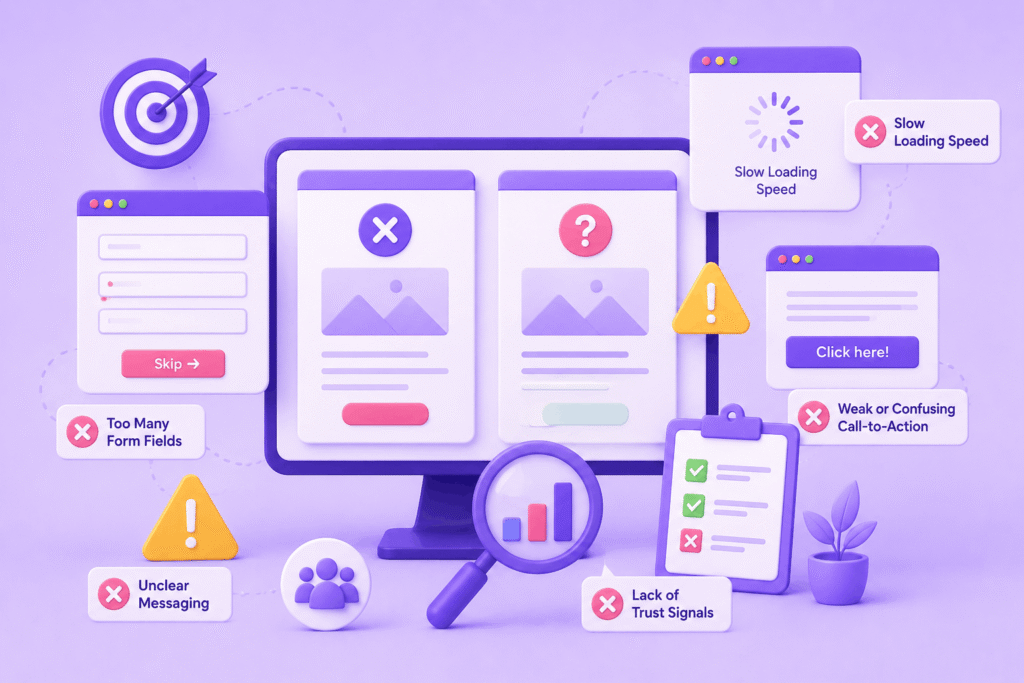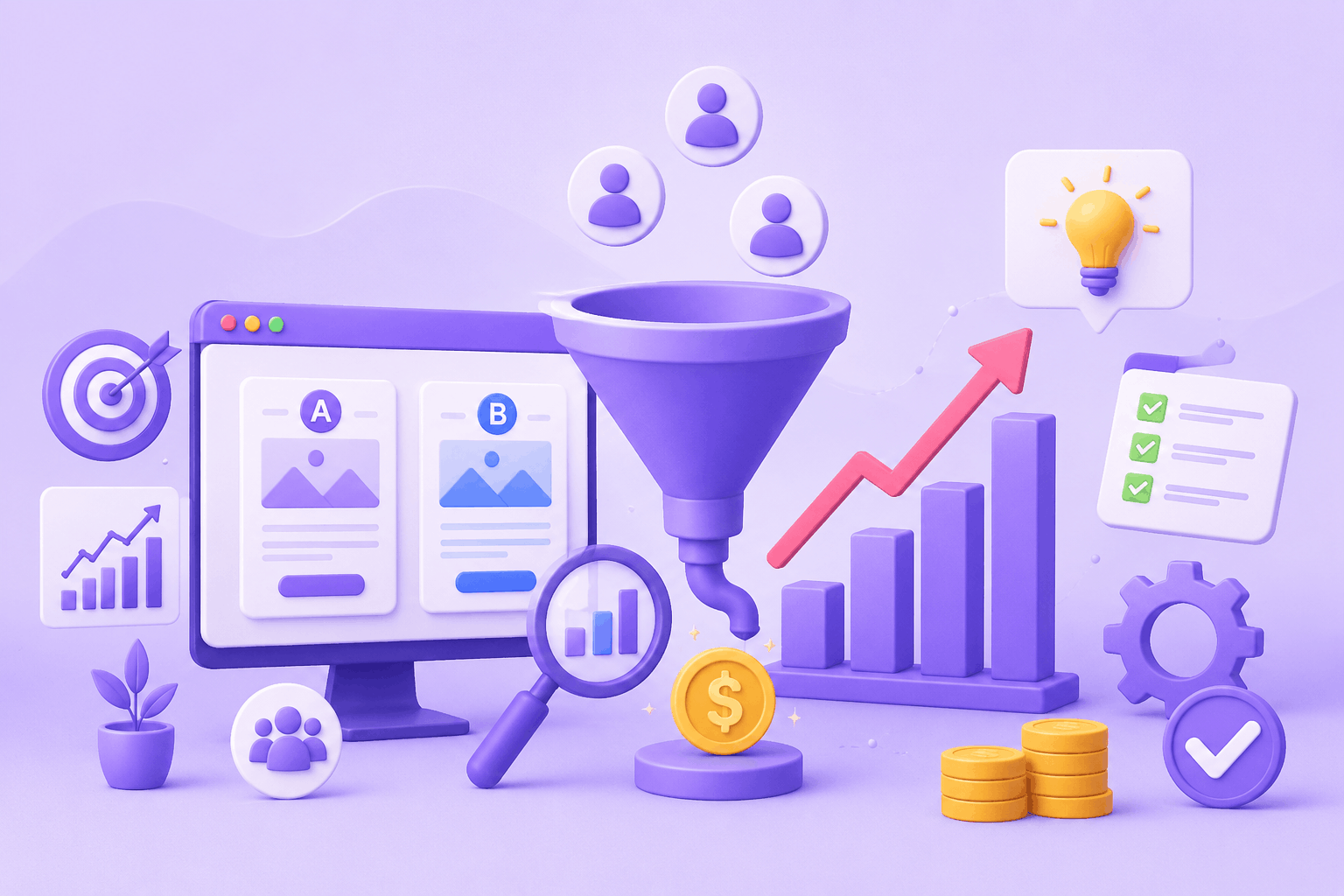
A large influx of traffic to your website may be a great start, but that doesn’t necessarily guarantee success. The bigger and more daunting task at hand is getting visitors to engage with your website in such a way that they convert into a customer, a subscriber, a lead, or even a user. Most businesses will invest a ton of time and money into generating a ton of traffic, but then allow that traffic to leave because of very small mistakes.
The great news is you don’t necessarily need a new website or a large marketing campaign in order to boost traffic. The truth is a few simple, strategic modifications to your website can make a dramatic increase in engagement and conversions. That is where CRO or conversion rate optimization comes into play. By understanding what visitors are doing on your website and optimizing based on what you know, you can boost conversions without ever having to increase traffic to your website.
This post will guide you through effective methods to raise conversion rates by making a few simple yet effective changes that will really make a difference.
Why Small Changes Matter
Most of the time, site owners think that to see real changes, they need to hire a completely new website designer or market extensively with big budgets. However, in reality, whether or not users continue browsing a site often depends on very minor elements such as the positioning of a button, loading time, how clearly the main message is conveyed, and the presence of trust elements.
Raising your conversion percentage by showing small changes might not convince many people that you are really improving your website; however, this is actually an increase in the number of conversions when the traffic remains the same. When these small step improvements are accumulated across the whole period, the overall effect on the business growth and revenue can become very significant.
The secret lies in finding the points where users experience difficulty and improve them through systematic testing.
Customize the User Experience
Today, online users usually want their experience to be adapted to their requirements and preferences. Presenting the same content to every site visitor is very likely to cause you losing possible conversions. Personalization is a tool for an enhanced user experience as it can be the display of the contents, suggestions, or offers based on the users’ behavior, place, or browsing history. Visitors who sense a level of understanding of their needs from your site are the most probable to become less passive and actually perform the conversion.
Examples of personalization on a website:
- Different offers may be given to new and returning visitors.
- Suggest products to a user in accordance with their browsing history.
- Tailor your CTAs for various audience segments.
- Show content or promotions that reflect the visitor’s location.
- Integrate dynamic content that complements user interests.
Eliminate Decision Fatigue
Typically, numerous companies are under the impression that conversion rates will increase once they provide visitors with a wider range of choices. Yet, presenting too many options may result in users becoming confused and unable to decide. Limiting choices can enable visitors to direct their attention merely to the work/item/action you want them to engage with and also their chances of exiting with no conversion at all will essentially decrease.
Ways to combat decision fatigue:
- Offer just a few pricing plans.
- Mark the highlighted option.
- Keep menus simple and minimalistic.
- Place focus on the main CTA per page.
- Take out unnecessary distractions.
Turn customer objections into moments of truth
Every customer will have his/her own set of questions before the buying process or registration for any service. If you would wait for customers to contact the support team, you might miss an opportunity. Or you may turn customer objections into moments of truth, providing answers to the most common questions upfront on your website. The result? Customer objections turned into relief and doubt vanishing.
Typical objections to deal with:
- Budget issues.
- Results-favorability of the product or service.
- Security and confidentiality.
- Availability of support and onboarding.
- Terms of contracts and cancellations.
Optimize Your Thank You Pages
Many businesses fail to consider the thank you page after someone has completed an action. But in fact, this page is a great chance to keep your visitors engaged and show them ways to take further actions. A thoughtfully crafted thank you page can bring in more value from customers and pave a way for them to interact at a deeper level with your brand.
Ideas for a thank you page:
- Items or services related to what the visitor has just purchased or signed up for.
- Links to scheduling demos or consultations.
- Product or service guides and resources.
- Buttons to follow on social media.
- Information on referring/loyalty program options.
Analyze Funnel Drop-Off Points
There is always a reason behind users leaving a website, especially if they are going through a conversion funnel. Knowing where exactly users exit the funnel can show some of the less obvious problems affecting the site’s performance. Dropping off points not only help understand what personal adjustments to make to the site but a bit of thoughtful tweaking can even yield good results regarding conversions without a drastic overhaul of the entire site.
Points that can be tracked:
- Visitors leaving the landing page.
- Percentage of shopping carts that are abandoned.
- Conversion rates for form submissions.
- Steps involved in the checkout process.
- Activities of the user prior to leaving the web page.
Continuous Improvement Wins
Conversion optimization should not be regarded as just another task with a deadline.
It is important to know that customer behavior is not static, market conditions change, competitors also keep working on their experience. Thus, the most successful companies are those which consistently test, analyze and update their sites. In fact, small steps towards better UX are barely noticeable but when accumulated over time, they bring much higher return on investment compared to the big changes which are done rarely and disrupt the users’ experience.
Ways CRO Forge Can Help You Boost Your Conversions
Making a great Conversion Rate Optimization (CRO) decision can not only be a matter of your gut feeling, but it can also be based on the data you find. The main purpose of CRO Forge is to help people, companies, agencies, and even medium-to-large enterprises improve their websites by using enjoyable, powerful CRO and A/B testing tools that are also easy to use.
Any business model is supported by some type of website. If you’re running an eCommerce store, SaaS platform, service-based website, or client campaigns, CRO Forge gives you the ability to:
- Easily set up and operate A/B testing.
- Use real user behavior to justify ideas.
- Enhance website experiences.
- Increase conversions through making data-backed decisions.
- Remove guesswork from the optimization process.
No need to speculate about what might work; instead, discover what really works for your audience.
Summary
Boosting conversion rate does not necessarily need drastic changes. Many times, the biggest conversion can occur due to minor changes, which are made smartly and continually. Better CTAs, reduced form friction, improved speed of your page, builds trust, ease of navigation and A/B testing altogether can change your business outcomes for good. The only thing to ditch is to stop guessing and start testing! The bestCRO tactics coupled with an ultimate CRO platform like CRO Forge will not only convert trivial tweaks to major business growth, but also bring about the true potential of your website traffic.