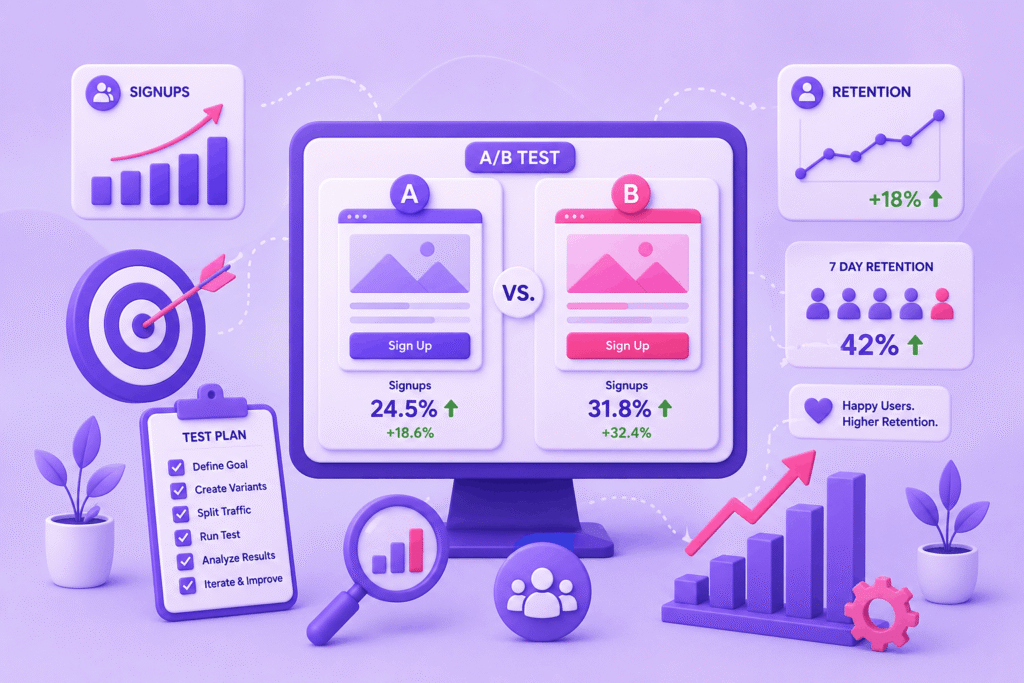
Guesswork is an enemy of growth in today’s competitive digital landscape. Whether running a SaaS, eCommerce store, blog, lead gen site, etc., conversions need to be optimized, and that’s where Conversion Rate Optimization enters. And ultimately, there are two major concepts in Conversion Rate Optimization – A/B testing and multivariate testing.
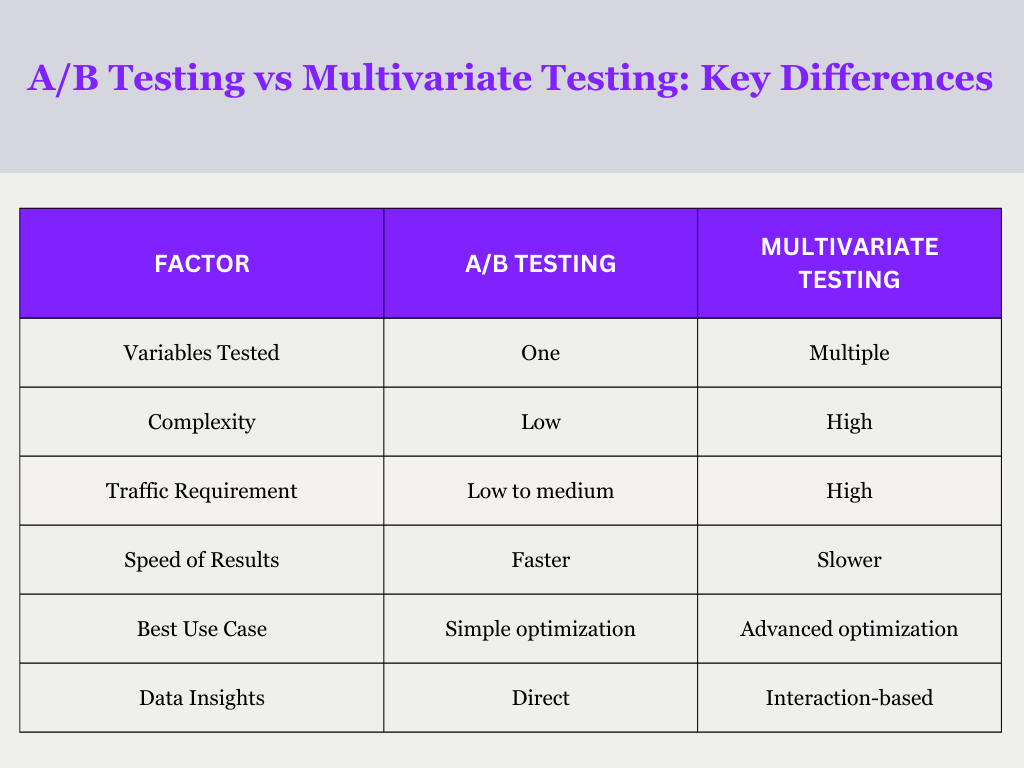
Although both testing techniques are mentioned in conjunction with each other, they have very different applications. Selecting the wrong option may result in waste of traffic, time, as well as money. In this guide, we’ll walk you through the key differences between A/B testing and multivariate testing, when to use them, as well as suggestions on how to make a decision for your business optimization endeavors by referring to CRO Forge.
Why Testing Matters in Conversion Rate Optimization
Every visitor on your website has a purpose, and so do you. The point is, a signup, a purchase, or a form submission, small changes in design and content can make a big difference in conversions.
Testing gives you the ability to:
- Make your decisions from real user behavior
- Enhance the user experience
- Boost your revenue without the need for additional traffic
- Take out the guesswork from design and marketing
Testing helps you to find the answer to “What actually works?” rather than “What do we think will work?”
What Is A/B Testing?
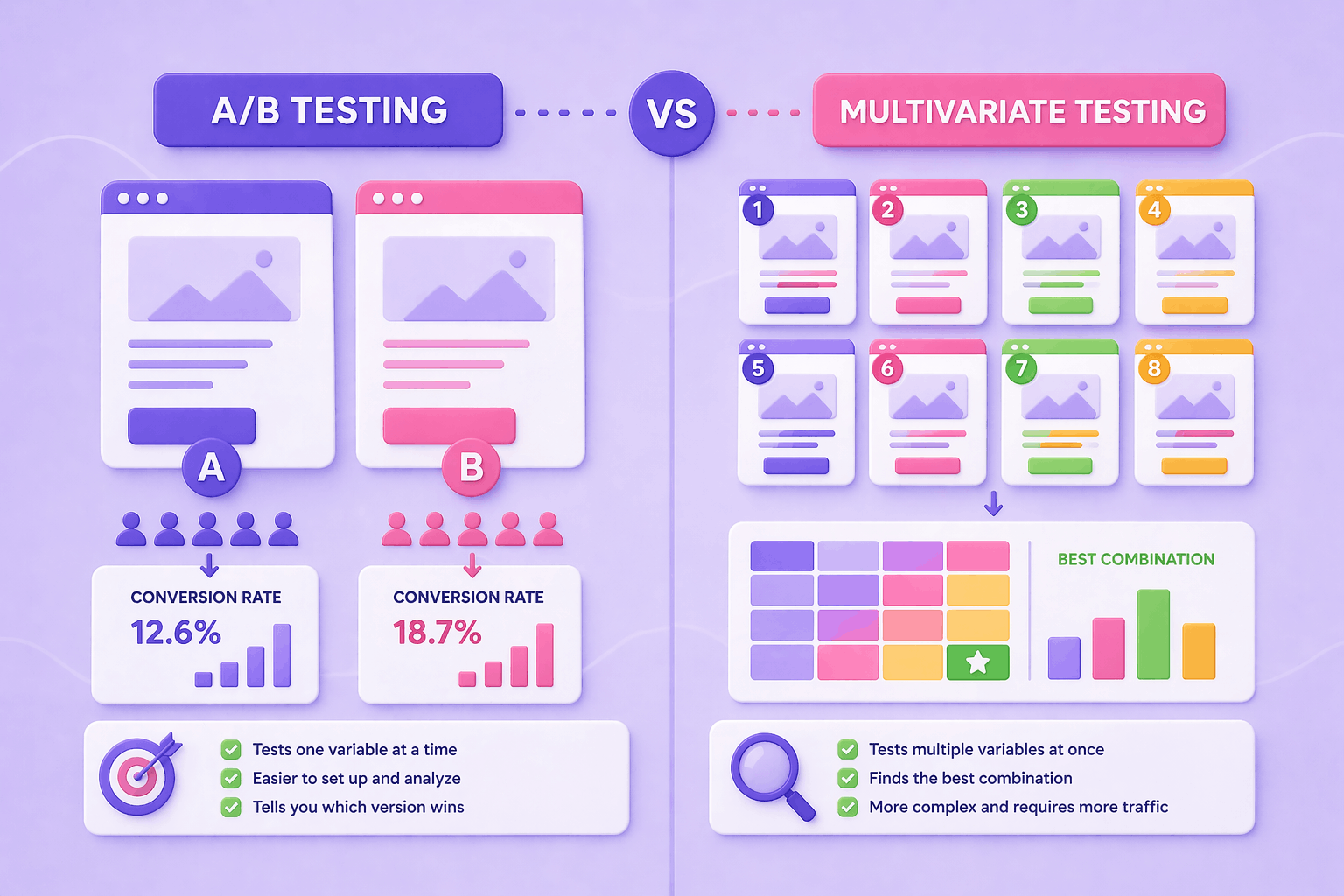
A/B testing or split testing is the most frequently used testing approach in CRO techniques; it involves testing two versions of an element to see which version performs better in comparison to the other.
How A/B Testing Works
Step 1: Make two variants of a webpage:
- Version A (Control) – the original
- Version B (Variation) – one change applied
Step 2: Equal split of traffic between both versions
Step 3: It’s performance is measured against an ultimate objective of it-conversion rate, clicks, sign-ups, etc.
Step 4: The version that wins is based on data.
Common Elements Tested in A/B Testing
- Headlines
- Call-to-action buttons
- Button color or text
- Pricing layouts
- Pricing layouts
- Form length
- Page copy
A/B Testing Example
Imagine the case of increasing your landing page sign-ups:
Version A: “Start Free Trial”
Version B: “Get Started in 30 Seconds”
With an A/B test, you learn that the Version B approach increases sign-ups by 18%. That’s a clear, actionable insight.
Benefits of A/B Testing
A/B testing has been unceasing in its success due to its simplicity and strength.
Key Advantages:
- Easy to set up and run
- Requires less traffic
- Produces clear and focused results
- Perfect for beginners and small businesses
- Faster decision-making
At CRO Forge, A/B testing is tailored to be user friendly for all – freelancers to big enterprises.
Limitations of A/B Testing
No matter how potent it is, A/B testing carries along its limitations:
- It only works with one variable at a time.
- It does not analyze the effect of the multiple variables working together.
- If you are conducting A/B tests with many separate changes, it will take time to get results.
That is why multivariate testing is needed.
What is Multivariate Testing?
Multivariate testing tests multiple elements on a page at the same time to understand how different combinations perform together.
While A/B testing simply checks “Which version is better?”, multivariate testing digs a level deeper asking: “Which combination of changes works best?”
How Multivariate Testing Works
1. Identify multiple elements to test (headline, image, CTA, etc.)
2. Create variations for each element
3. Generate all possible combinations
4. Split traffic across combinations
5. Analyze which combination delivers the highest conversions
Multivariate Testing Example
Assuming you test:
Headline: 2 variations
CTA button color: 2 variations
Hero image: 2 variations
That results in 8 different combo sets (2×2×2).
What multivariate testing can tell you is:
- Which headline matches best with which image
- How CTA color influences messaging
- The highest-performing overall experience
Top Benefits of Multivariate Testing
- Experiment with several elements at once
- Recognize interactions between different elements
- Perfect for highly advanced optimization
- Make the most of page-level performance
- Good fit for very high traffic websites
Multivariate testing could be a great tool for mature sites that have a lot of traffic.
Drawbacks of Multivariate Testing
- Demands a very large amount of traffic
- It is more complicated to put into practice
- Needs time to attain statistical significance
- May be too much for beginners
If your traffic is low, the outcomes might not be very reliable.
When Is A/B Testing The Right Choice?
A/B testing works well when:
- You’re just starting with CRO
- You want to test one idea
- You don’t have much traffic
- You want fast, dependable results
- You’re working on landing pages, CTAs, or headlines
- The majority of sites should kick off their testing with A/B tests.
When Is Multivariate Testing The Right Choice?
- If you have a website with really high traffic
- If there are many components on the page that need optimization
- If you want a better page experience overall
- When you have successful A/B tests under your belt
- When you want to get very deep with your CRO insights
How CRO Forge Helps You Test Smarter
At CRO Forge, we believe CRO should be intuitive, approachable, and driven by data. Whether you’re trying your first A/B test or running complex multivariate experiments, our platform is there to help you:
- Start tests without coding
- Monitor performance in real time
- Understand your results easily
- Make decisions faster and with certainty
From SaaS companies and eCommerce businesses to freelancers, agencies, and bloggers, CRO Forge is an all-around platform.
To Sum Up: Which Testing Method Is Right for You?
A/B and multivariate testing can both contribute greatly to CRO in different ways. Thus, the main focus should be on when and how to use them effectively.
Going for clarity → A/B Testing
Going for depth → Multivariate Testing
The most effective CRO tactics always base their decisions on testing, learning, and continuous improvement rather than mere opinions.