In digital marketing and product optimization domains, CRO (Conversion Rate Optimization) and UX (User Experience) are a couple of terms that are almost always linked. Sometimes, they are portrayed as separate disciplines or even confused with each other, but essentially, the fact is that CRO and UX bring out their best when they collaborate.
What if a website that looks stunning doesn’t convert, or if it does convert but users get annoyed? The solution lies in the missing link between CRO and UX. We will dissect the distinctions between CRO and UX, show how they benefit each other and how the synergy of both can result in an amazing increase in conversions through tools like CRO Forge in this article.
What Is CRO?
Conversion Rate Optimization or shortly CRO is a method of increasing the proportion of visitors on a website who carry out a specific action. The action can be:
- Purchasing
- Giving an email
- Filling out a survey
- File download
- Opening a link
CRO hinges on data, experiments, and identifiable results almost exclusively. Rather than guess, it looks at the actual behaviors of users to decide what is superior and what is inferior.
Key Elements of CRO
CRO consists of many marketing and web optimization strategies, such as:
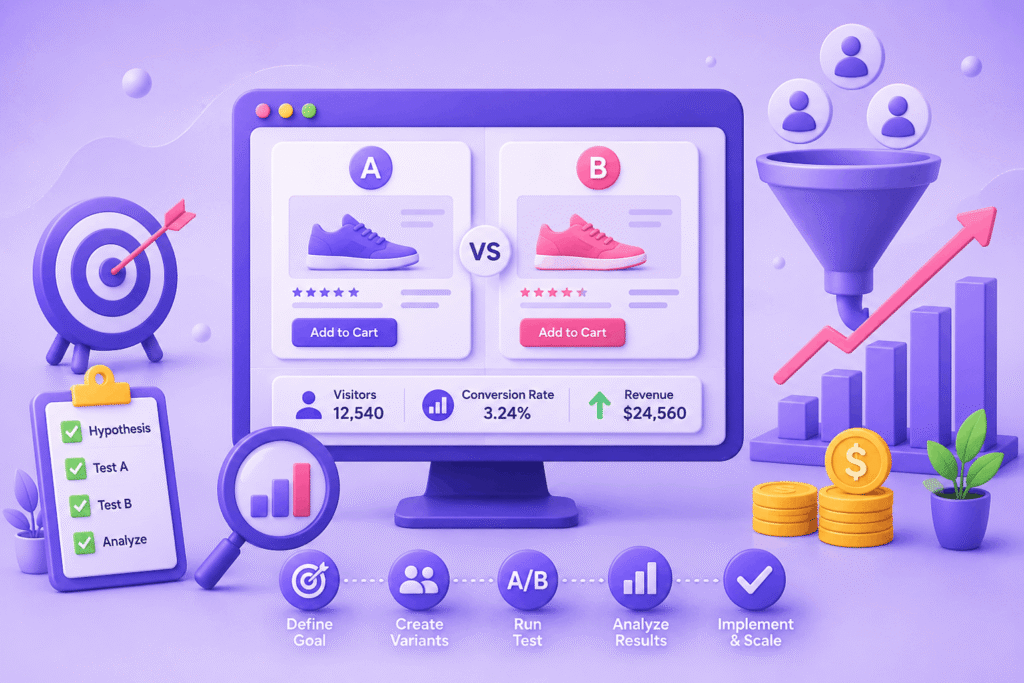
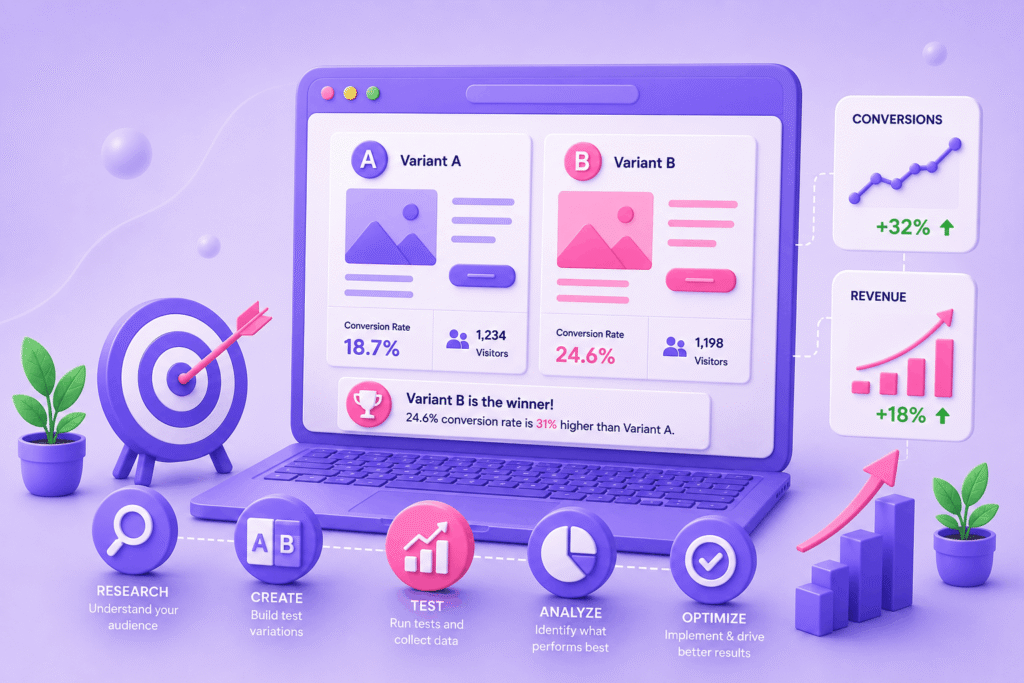
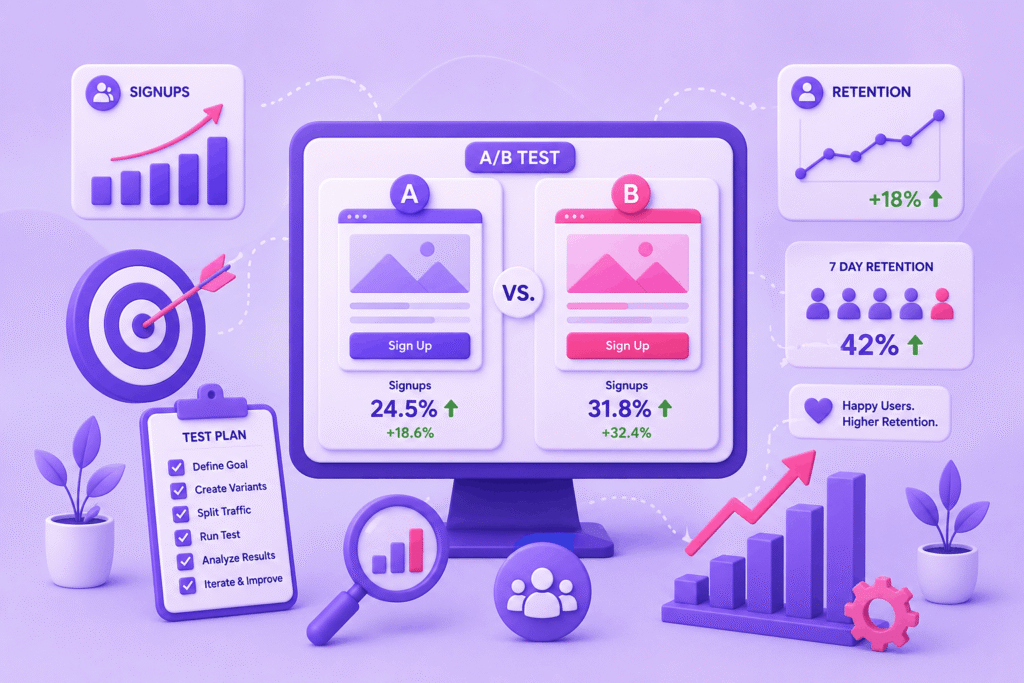
- the use of A/B testing and split testing methods to identify the most efficient variations of web pages or elements within a page
- detailed funnel analysis to understand how visitors move through the conversion path
- the utilization of visual tools like heat maps and click tracking to ascertain which areas of the site are busiest in terms of interaction from users
- determination of exact conversion metrics and KPIs with the objective of measuring success
- conducting hypothesis-driven experiments to methodically test assumptions and innovations.
Platforms such as CRO Forge democratize CRO by making it available to anyone, be it freelancers, agencies, startups, or enterprises of any size, thus allowing them to plan and develop CRO strategies with minimal technical intervention.
What Is UX (User Experience)?
User Experience, in a nutshell, is all about the user perception of the overall experience on your website or product. It is all contained within the boundaries of the user’s comfort and happiness in performing his/her tasks.
A good UX ensures that users are able to:
- Go through your website without any trouble
- Locate the details they require in no time
- Perform their activities in a smooth manner
- Have a seamless and straightforward experience
While UX focuses predominantly on the impact and CRO on the metrics of the impact, at the end of the day, both are aimed at serving the user.
Key Elements of UX
- organs and flow of the website
- page loading speed and overall performance
- adaptability of site functionalities and layout to the mobile devices
- the use of size, color, and shapes to denote the level of importance of various elements on the webpage
- design elements that render the content readable and thus understandable to all kinds of users
Excellent UX will keep the users coming back as it eliminates the causes of their frustration, engenders confidence, and foments engagement.
How CRO and UX Work Together
CRO and UX synchronization can yield an almost miraculous outcome. Here’s a little bit of the secret behind their joint power to pack a punch in getting conversions.
1. CRO Builds Upon the Framework Developed By UX
A good user experience reduces the conversion process to the minimum of irritations. Users become more open to engagement if there are well-thought-out navigation, easily legible content, and a visually sensible design leaving next to no room for confusion. CRO is the builder of performance improvements tested in a variety of ways which is the second step of the conversion route.
Without an impeccable UX, CRO experiments will flywreck as users however their frustrating scent
2. CRO Assures UX Choices Using Empirical Evidence
It is quite common for UX people to go by intuition, research, and user feedback. At the same time, CRO empowers them to confirm those findings with actual data.
As a case in point, please consider:
- One of the UX team’s proposals was to shorten the form
- CRO challenged that by comparing the shortened version to a longer one
- Results showed data which version has a better conversion rate
CRO Forge has the facilities and necessary functions to help you decide by means of real users which changes in UX are the most effective.
3. UX Builds Trust, CRO Turns Trust into Action
Trust greatly influences whether a visitor will convert. Various elements of UX such as brand consistency, nice and clear communication, and user-friendly layouts go a long way in establishing customer trust.
On the other hand, CRO is more about making sure that call-to-actions, headlines, and page elements are in sync with those feelings of trust so that it gets translated into tangible actions.
In brief:
- UX inspires trust
- CRO motivates action
4. Continual Development Through Trials
UX is a continuous process and CRO is not just a single test. You can combine both to come up with a never-ending optimization loop:
- Find UX problems
- Form hypotheses
- Run CRO tests
- Study the data
- Make UX better according to data
The continuous process is what makes CRO Forge software so awesome, allowing teams to efficiently perform iteration and thus increase conversions gradually.
Common Myths About CRO and UX
Let’s clear up a few misconceptions:
Myth 1: CRO Damages the User Experience
Reality: Not all CRO practices are bad, and data-driven CRO helps UX by reducing friction.
Myth 2: The UX is sufficient
Reality: A stunning layout alone won’t bring conversions. Testing is still needed.
Myth 3: Only big companies do CRO
Reality: Thanks to CRO Forge, even freelancers and small business owners can do CRO.
How CRO Forge Bridges CRO and UX
CRO Forge aims to integrate CRO and UX into one user-friendly platform. Regardless of whether you are working on your webpage, an online shop, a SaaS application, or client marketing, CRO Forge will assist you in:
- Experimenting with UX changes through A/B testing
- Deciding based on data
- Optimizing user flow
- Generating conversions without carelessly working
Blending actual users’ data with clever testing features, CRO Forge makes sure that the UX changes are not only aesthetically pleasing but also conversion-oriented.
CRO + UX = Sustainable Growth
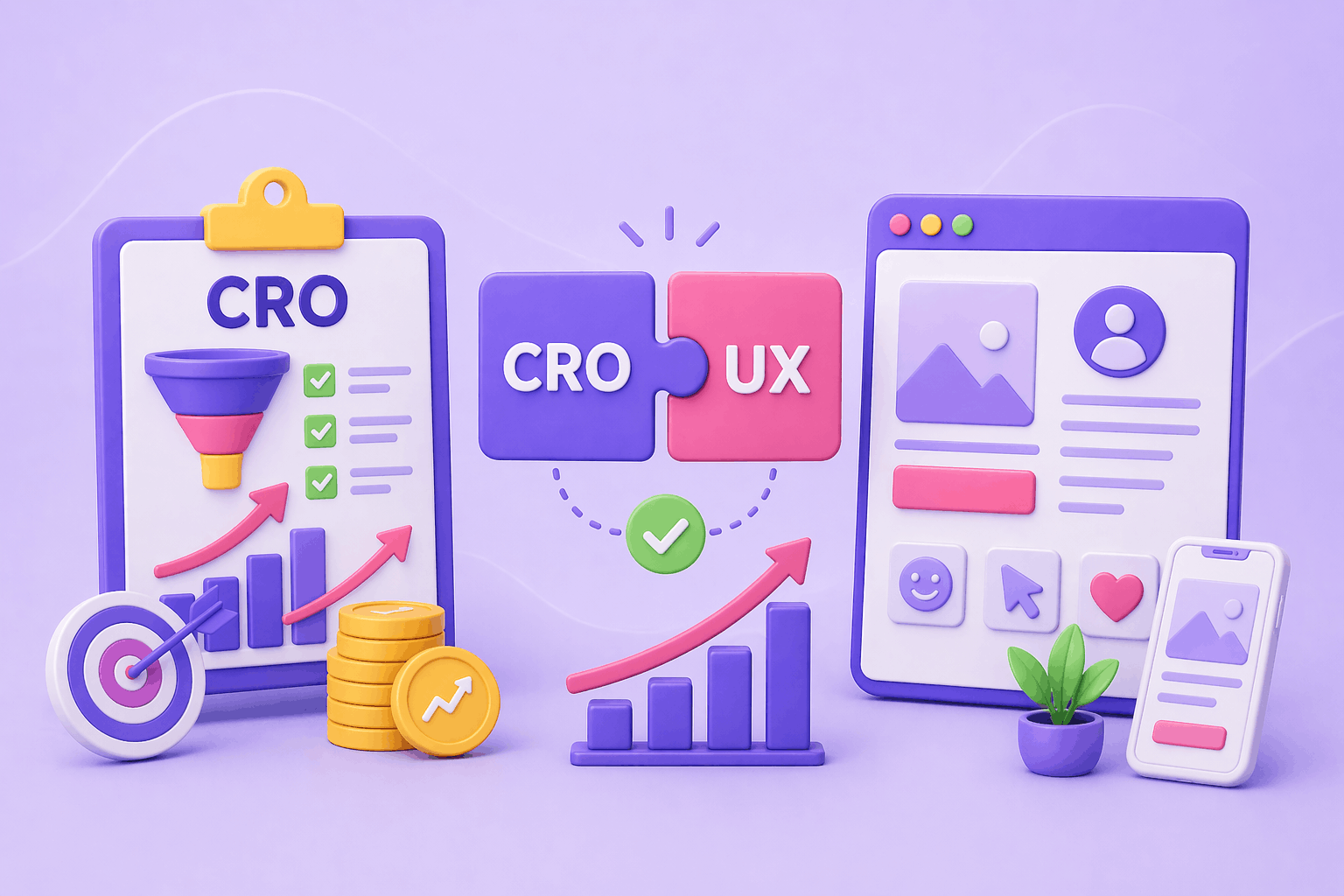
Instead of being competitors, CRO and UX complement each other
- UX guarantees that consumers get the most of the journey
- CRO guarantees that the journey leads to the outcomes
Used together, they are capable of producing websites that are smooth to use as well as being great at converting visitors into customers.
Suppose, you are done with random assumptions and are ready to embark on the path towards growth, then adjusting UX to CRO through a platform such as CRO Forge is the most intelligent step you can take.
Final Thoughts
The creation of successful websites that generate conversions is not an accident; rather, it is the culmination of a thoughtful process including the users and data-driven optimization. The combination of CRO and UX will allow you to create an experience that won’t only keep your users happy but will also achieve business objectives. Want to know how to make better experiences lead to better conversions? CRO Forge is the answer.