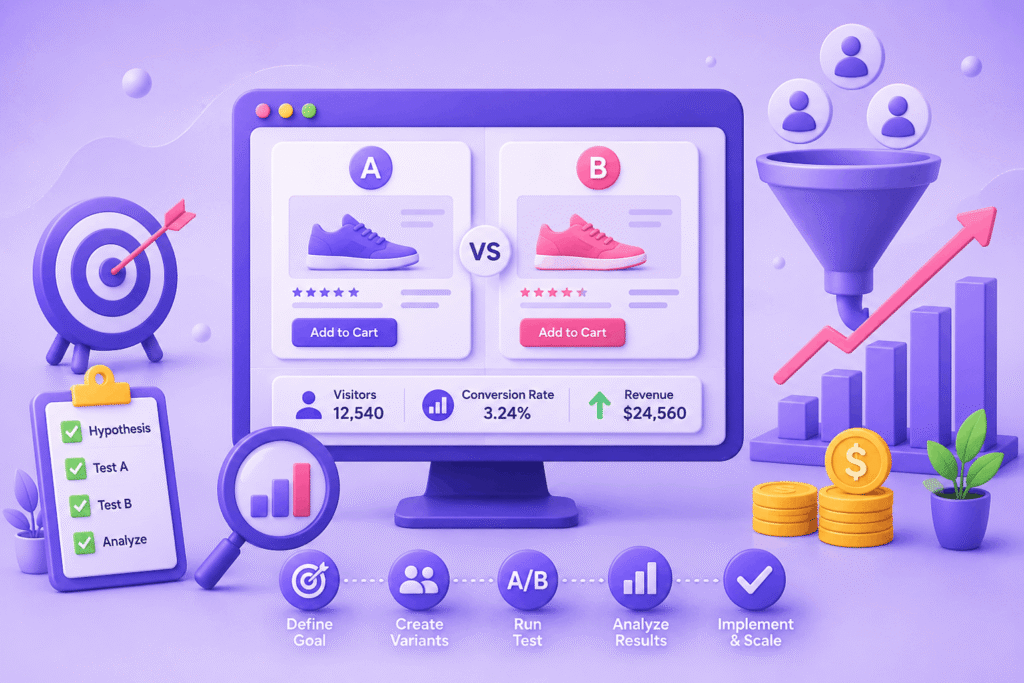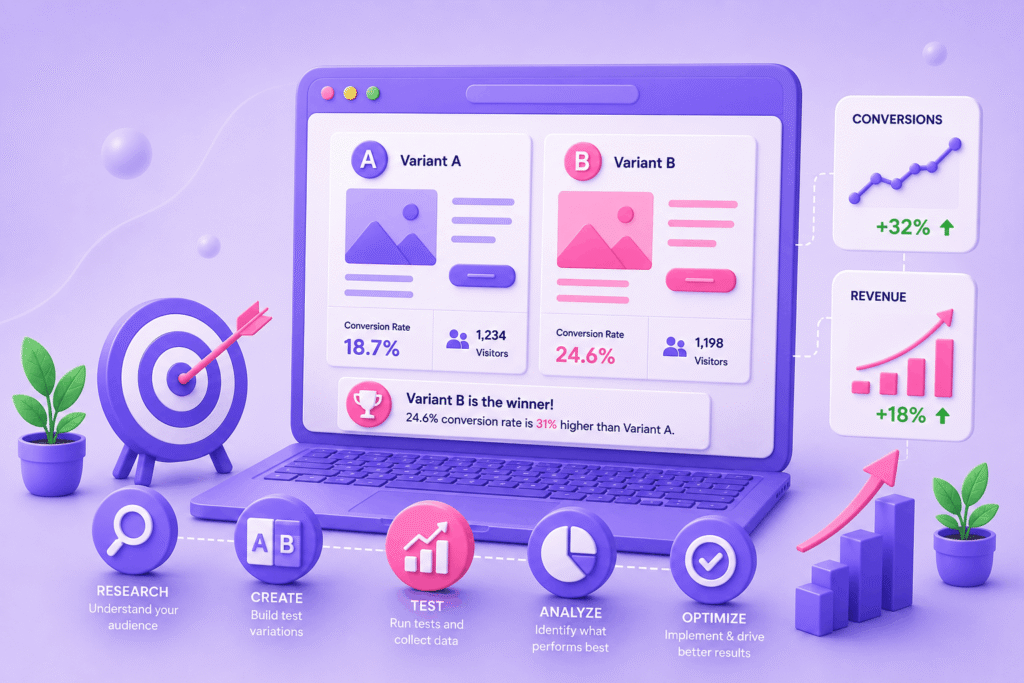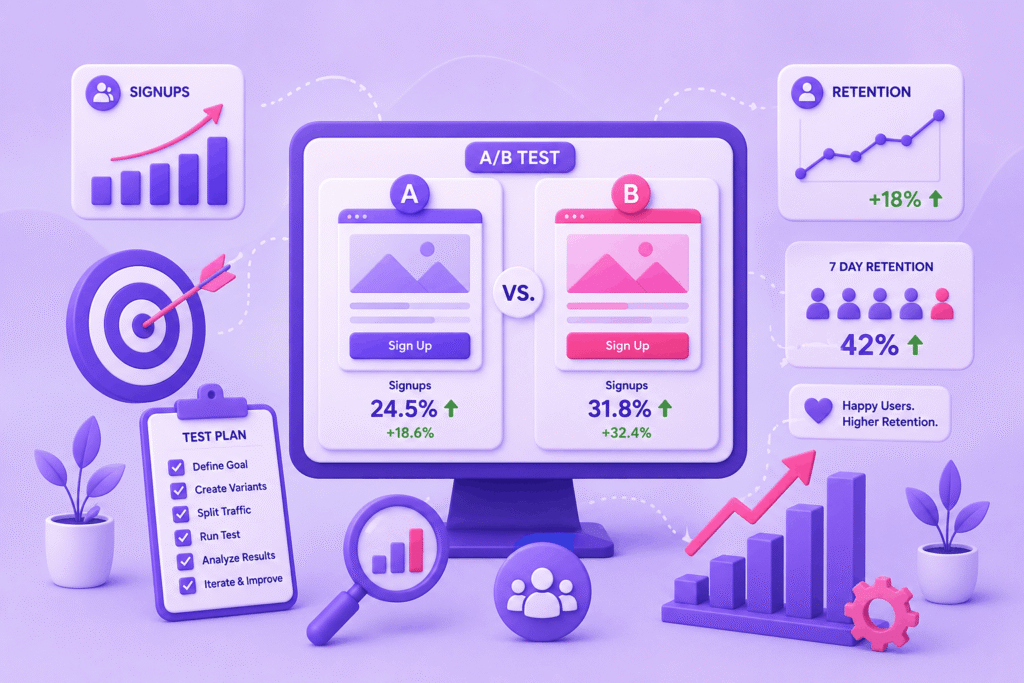
Running an A/B test is definitely a fun experience. You throw out a new headline, change a button color, or even redesign a landing page and then you just have to wait. However, here is a reality most marketers only realize through experience: a test run is only half the battle. The biggest benefits come from correct interpretation of A/B test results.
If the data interpretation is incorrect, you might make changes based on the noise instead of facts. And that is similar to using a compass which spins randomly- you will move but not necessarily in the right direction. With step-by-step instructions, real-world reasoning, and simple language, this guide will show you the proper way to analyze A/B test results.
Whether you are just starting or have been optimizing for a while, a tool such as CRO Forge can shorten, clarify, and improve this process considerably.
Why Analyzing A/B Test Results Correctly Matters
Picture a scenario where you have been driving traffic to a test for weeks and then make a wrong decision about the winner. This is a problem that poor analysis is likely to cause:
- Conversion rate decrease
- Negative impact on user experience
- Loss of marketing budget
- False assurance of success
On the other hand, accurate analysis enables you to get user behavior and not just gym for higher numbers. You don’t have to be a psychic if you own CRO Forge; it is real data that is going to direct you in every step that you take.
Understanding the Concept
Before you start analyzing any data, it is very important first to understand the problem thoroughly.
What is A/B Testing?
A/B testing is a method of comparing the two different versions of a product or element to see which one performs better:
- Version A: Original control
- Version B: Modified variation
Traffic allocation is divided between the two and performance is measured based on a preset goal, typically conversions.
Important Metrics to Be Tracking
Below is a list of the most common A/B testing metrics:
- Conversion rate
- Click-through rate (CTR)
- Revenue per visitor
- Bounce rate
- Time on page
CRO Forge allows you to monitor all these metrics from a single dashboard thus reducing the chances of missing any.
The Typical Objectives of A/B Testing
A/B tests are not only about increasing the number of clicks. Goals might be as follows:
- More sign-ups
- Higher sales
- Improved engagement
- Reduced drop-offs
It is important to understand your goal(s) at the very start as this will greatly simplify your analysis later.
Cleaning Your Data for a More Accurate Analysis
Poor data quality results in poor decisions. It is that simple.
Assess Length of the Test– The biggest mistake by many is to end their test too early. A test duration should be sufficient to:
- Include weekdays as well as weekends
- Reflect natural variations in traffic
With CRO Forge, you can keep the progress of the test at your fingertips without hastening to a verdict.
Have a Large Enough Sample Size– Using a small sample is pretty much like flipping a coin twice and then declaring the result to be science. In order to trust the outcome, you need a sufficient number of visitors. The greater the volume, the higher the statistical reliability.
Stay Away From Partial Traffic Sources– If one version receives traffic from paid ads while the other one is organic, the results will be distorted. CRO Forge will take care of ensuring that traffic is evenly distributed through the use of automatic settings.
Understanding Statistical Significance
Many people get lost here—but the truth is, it doesn’t need to be complicated.
What Statistical Significance Really Means
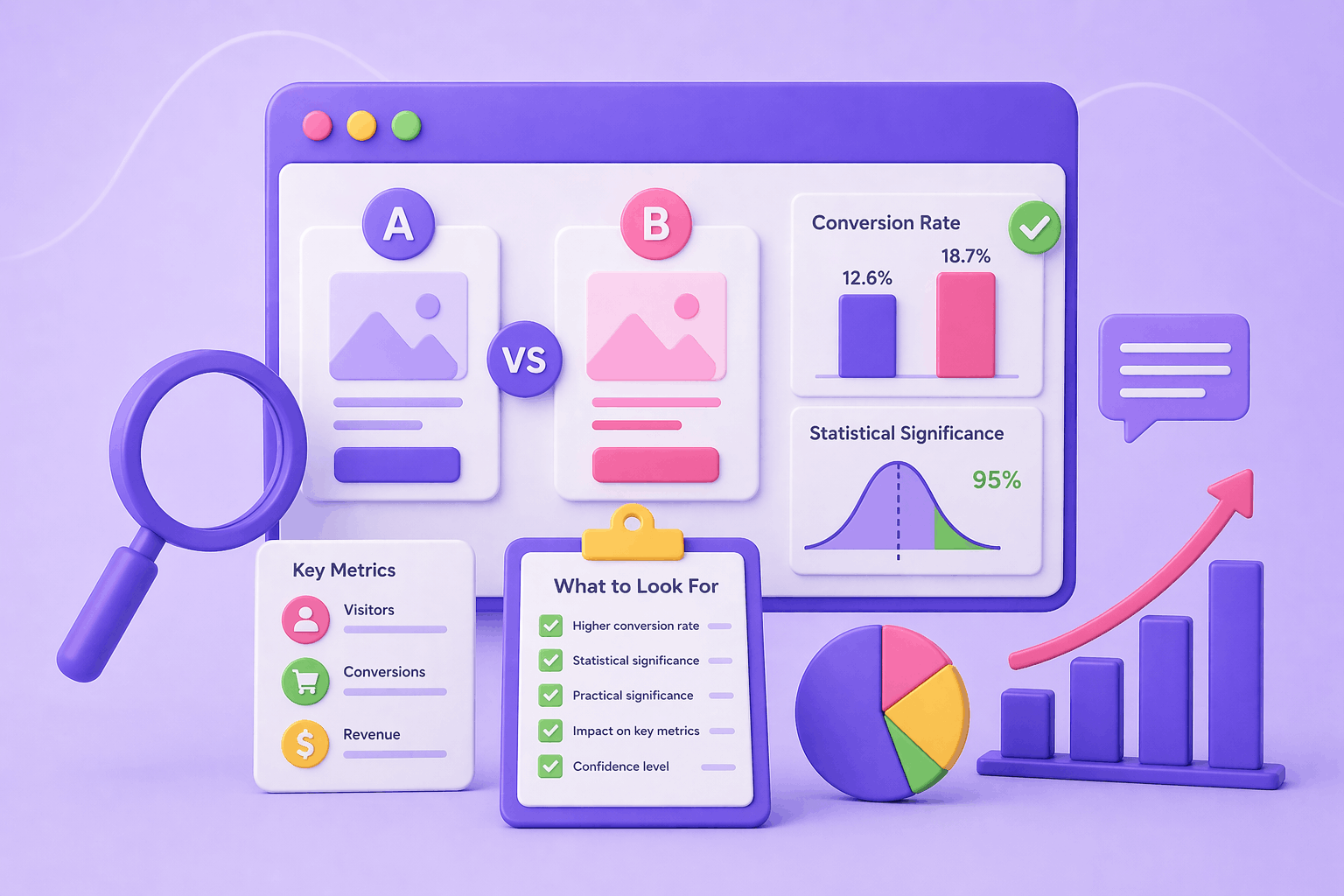
Statistical significance provides the answer to one question only: “Is the change responsible for this result or is it just a coincidence?”
If the result has statistical significance, it means that you can rely on it with a degree of trust.
Confidence Level vs Confidence Interval
- Confidence Level: Your degree of certainty (most often 95%)
- Confidence Interval: The probable range within which the true value of the result is found
- CRO Forge makes these calculations without any need for you to be a statistics expert.
False Positives and False Negatives
- False positive: Choosing the winner prematurely
- False negative: Failing to detect an actual improvement
- With the correct method of analysis you will be able to avoid both.
Comparing Control vs Variation Performance
Here is the most interesting part, comparison made in parallel.
- Conversion rate difference– Don’t just focus on the numbers in isolation. A slight percentage increment can result in substantial revenue growth over time.
- Lift Percentage– Lift tells you how much better (or worse) the variation did relative to the control. CRO Forge portray this clearly, without using jargon that is confusing.
- Revenue and Engagement Metrics– There are cases when a version has fewer conversions but generates higher revenue per user. In such cases, always take an overall look.
Segmenting Your A/B Test Results
People are different and so, not all the users will behave in the same manner, of course.
- Device-Based Segmentation– Read the situation story of the desktop users and the mobile users.
- Traffic Source Segmentation– Different types of traffic will react differently most of the time. CRO Forge simplifies breaking down the results.
- New vs Returning Visitors– The first time visitor wants clarity while if user is coming back he values familiarity. Segmenting helps uncover these.
Looking Beyond Just the Winner
Winning doesn’t always mean “best overall”.
- Micro-Conversions Matter– Scroll depth, button hits, form completing – the clues are there.
- Behavioral Changes– Heatmaps, session replays, and engagement trends provide the context for the numbers.
- Impact on User Experience– User conversion rate means nothing if they feel frustrated. CRO Forge balances between performance and user experience.
Common Mistakes When Analyzing A/B Test Results
Everybody makes errors – even the pros.
- Ending Tests Too Early– A victory seen early is often lost with time. Patience always pays.
- Ignoring External Factors– Result distortion is possible due to holidays, promotions, or traffic spikes.
- Testing Too Many Changes at Once– When you change everything, it would be impossible to figure out what brought the effect. CRO Forge promotes concentrated and clean experiments.
How CRO Forge Simplifies A/B Test Analysis
The thing where CRO Forge is really a great helper is here.
- Real-Time Reporting– You get to know and understand what is happening with your performance even the minute it is happening.
- Clear Visual Insights– You will find it very easy to understand and communicate your findings with others thanks to the great charts, graphs, and summaries used.
- Beginner-Friendly Yet Powerful– Regardless of whether you are a solo entrepreneur or a mid-sized company, CRO Forge will give you the tool you need without getting you bogged down.
Turning Insights into Action
Without the step of acting on, data just becomes a waste.
- Deciding What to Implement– Do only those implementations that have the best data-to-back-up changes.
- Documenting Learnings– A test, be it a success or a failure, is a teacher in itself. Keep records.
- Planning the Next Test– CRO Forge makes it possible for you to continuously carry out the optimization cycle rather than doing it as a one-off task.
Conclusion
The goal of A/B test analysis is not to find the winners but to learn about your users. The right analysis of the data can turn numbers into insights that can fuel growth. You don’t have to be a data scientist to make informed decisions with a tool like CRO Forge. All you need is curiosity, time, and a willingness to learn from real user behavior.